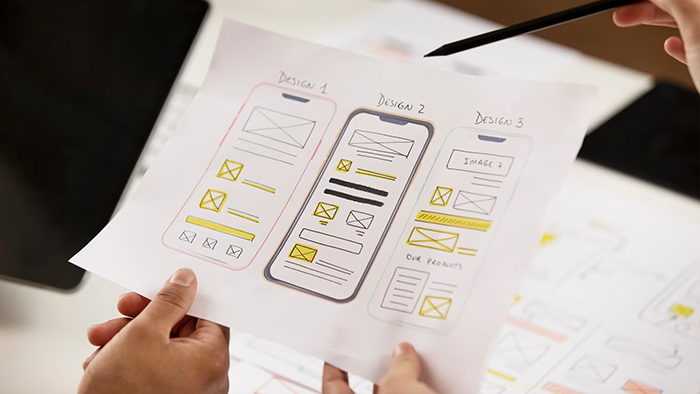
A product designer is an established role in the technology industry: someone who shapes software, websites and app experiences. The work combines design craft and creativity with a deep understanding of people, business and technology.
It is not only about visual appeal. Product designers look closely at the entire user experience and at what helps a product succeed over time.
Why product design belongs in the team
Many designers begin in graphic design and later specialise in areas such as product design, interaction design, motion, 3D, animation, typography, print or brand work. Each discipline brings real value.
The role of a product designer is distinct because it is concerned with solving problems at a deeper organisational level. It asks what should be built, for whom, why it matters and how the solution can work in the real world.
Shaping experiences around people
Product designers take a holistic view: they align the outcome with business goals while responding to what people actually need.
The smallest unit of product development is the user. Through empathy-led design, product designers study behaviour, preferences and pain points, then translate those insights into experiences that are useful, accessible and satisfying. The aim is an interface that feels intuitive rather than demanding attention for its own sake.
Collaboration across disciplines
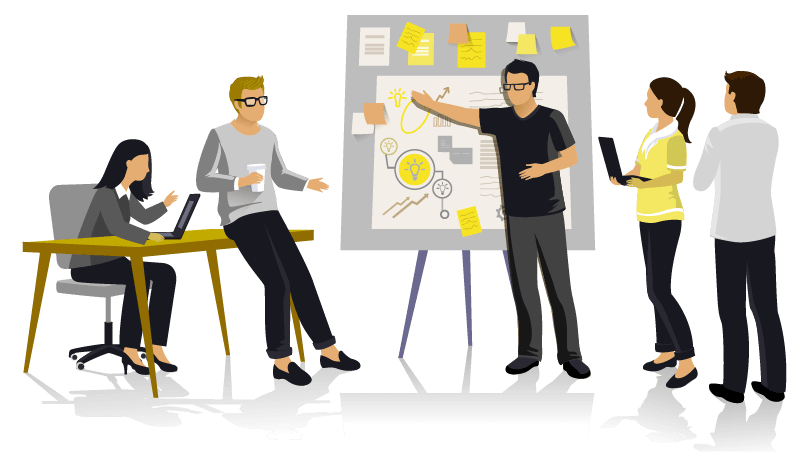
Product development is collaborative by nature. Designers work closely with product managers, product owners, developers, marketers, subject-matter experts and other stakeholders.
Their role is often to bridge technical feasibility and user desirability. By combining insights from across the team, a good product designer can make trade-offs visible and help align stakeholder expectations with an outcome people can genuinely use.
From concept to implementation
The journey from an early MVP idea to a tangible product is iterative. Product designers use methods such as design thinking, wireframing, prototyping and user testing to turn ideas into testable, functional solutions.
Iteration makes room for learning. Teams can validate assumptions, respond to feedback and adapt to changing market conditions before committing fully to development.
Balancing form and function
Product designers work at the intersection of form and function. They make sure visual elements reflect the brand while functionality supports the needs of the people using the product.
This balance is what makes a digital product feel coherent: it is recognisable, easy to use and purposeful at the same time.
Advocating for innovation
Product designers are also catalysts for innovation. Informed by business direction and insights from different teams, they turn exploration into concrete concepts. They question assumptions, test new approaches and help products evolve without losing sight of the user.
A practice that keeps evolving
Product development never stands still. Product designers need to keep learning, adopt relevant technologies, understand changing patterns of behaviour and refine their skills as the context shifts.
Their value lies in bringing together creativity, user empathy and business understanding. The role reaches far beyond aesthetics: product designers help create solutions that resonate with people and support meaningful business outcomes.
If your team is shaping a new product or rethinking an existing one, let’s talk.