Before I designed products, websites or digital experiences, I spent years drawing characters. Looking back, I was not only learning illustration. I was unknowingly learning empathy, storytelling and the foundations of user experience.
When I thought I wanted to become an illustrator
For a long time, I believed illustration would become my career. I spent countless evenings drawing characters, experimenting with colours, creating personalities and imagining worlds they could live in.
Artida was not just an illustration project. It became my laboratory.
I designed more than a hundred original characters inspired by different cultures, animals, food, professions and imaginary worlds. Some became colouring books, some became T-shirts, some were printed on notebooks, and some never left Illustrator.
At the time, I thought I was practising drawing. Looking back, I was practising something entirely different.
Every character started with one question
Not: “How should it look?”
But: “Who is it?”
What kind of personality does it have? How does it behave? Why would someone care about it? How do children understand it immediately?
Without realising it, I was already thinking about users. Only back then, I called them children. Today I call them users. The questions have not changed.
Illustration is really communication
Good illustrations do not exist because they are beautiful. They exist because they communicate something clearly: emotion, curiosity, safety, joy or identity.
The same is true for digital products. A beautiful interface that does not communicate well fails just as quickly as a beautiful illustration without a story.
Storytelling became structure
Creating children’s stories taught me something unexpected. Every story needs a beginning, direction, rhythm, tension and resolution.
Years later, I realised digital products work in exactly the same way. Good onboarding, navigation, user flows and information architecture are all forms of storytelling. You are simply telling the story with interactions instead of illustrations.
Designing emotions before interfaces
Children do not analyse interfaces. They react emotionally. They immediately know whether something feels friendly, safe, confusing, fun or boring.
The same applies to adults. We simply pretend we are rational.
One of the biggest lessons illustration taught me is that emotion comes before logic. People decide how they feel first, then justify it afterwards. That lesson has stayed with me throughout every website, product and digital service I have designed since.
Curiosity became my biggest design tool
Illustration also taught me curiosity. Every new character meant researching animals, countries, traditions, languages or professions. I was not only drawing. I was constantly learning.
Looking back, that curiosity became one of the reasons I naturally expanded into UX, branding, SEO, analytics and digital strategy. I was never interested in mastering a single discipline. I wanted to understand the whole picture.
Today I rarely draw characters, but illustration never really left. It simply changed its form.
Instead of designing characters, I design systems. Instead of telling stories through drawings, I tell them through products. Instead of asking, “Will children understand this?”, I ask, “Will people understand this?”
The tools changed. The mindset stayed exactly the same.
Closing reflection
When people look at my portfolio today, they usually see websites, digital products and strategy. Very few realise that many of the principles behind that work were shaped years earlier while creating children’s characters, stories and products that never became the global brand I once imagined.
Artida may never have become the next Hello Kitty. But it quietly became something even more valuable: it shaped the designer, and the way of thinking, that I still rely on today.
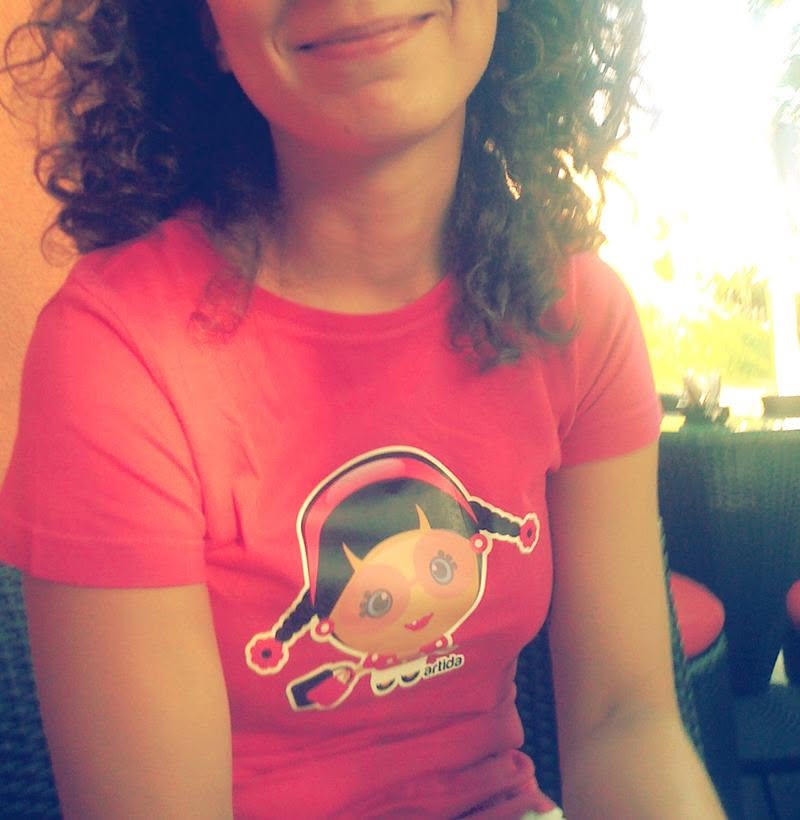
One of the first Artida characters I illustrated around 2010. Looking at it today, I don't only see a drawing—I see the beginning of everything that came later.