What Artida taught me about design, business and letting go
A personal reflection on illustration, product development and knowing when to move on.
Originally published on 1 March 2020. Editorially revised with original project images preserved.

Around 2010, I started developing Artida, a personal project that grew from my love of illustration into an attempt to build a brand.
I spent years creating characters, developing products, learning about licensing and trying to turn an idea I believed in into a business. It did not become what I had imagined. Sales remained modest, partnerships did not bring the progress I had hoped for, and eventually I had to decide whether to keep going.
But the business outcome is only one part of the story. Artida also gave me practical experience, unexpected opportunities and some difficult lessons about the relationship between creative work and commercial decisions.
How it started
The idea behind Artida was to create a family of illustrated characters representing different cultures, animals, activities and imaginary worlds.
I imagined children getting to know them through interactive stories, games and everyday objects. T-shirts, bags, notebooks, colouring books and accessories could bring those characters beyond the screen. Somewhere in that vision was the possibility of building a recognisable Slovenian character brand, perhaps even our own version of Hello Kitty.
That was the ambition, not the outcome.
What kept me working was how much I enjoyed creating the world around the characters. Illustration led to stories. Stories led to products. Products needed packaging, a website and a way to reach people.
I wanted Artida to feel welcoming across differences in age, culture and background. Developing its visual identity and voice became as important to me as drawing the individual characters.

Trying to build something bigger
I tried to do almost everything myself.
I moved between Illustrator, Photoshop and InDesign, experimented with animation in Flash, built an online shop and managed the website. I created social media posts and advertisements, learned about printing, prepared physical products and took orders to the post office.
I enjoyed that variety. But enjoying every part of the work did not mean I could turn it into a sustainable business on my own.
I put a great deal of time into Artida, often working on it day and night. Sales were never high enough or growing enough to match that effort.

I kept looking for ways to make it work. For three consecutive years, I travelled to the licensing fair in Bologna to learn from people in the industry. I followed established brands, read licensing publications and connected with people through professional networks and online communities. I tried to apply what I learned to Artida’s communication and online shop.
There were opportunities to work with agents, too.
A Slovenian licensing agent whose company already worked with brands on school supplies contacted me. I prepared presentation materials, a brand booklet and an extensive style guide for future product development. The collaboration did not lead to the progress I had hoped for.
Later, I signed an agreement with an agent from Poland. Apart from some design work I produced for him, that arrangement did not bring the results I was looking for either.
I began questioning what was missing. Was I making the wrong decisions? Was the idea not being executed well? Had I spent too much time developing the brand before understanding how it could become commercially viable?
Believing in the characters was no longer enough to answer those questions.
The moments that made it worthwhile
Alongside those difficulties, Artida created opportunities I had not expected.
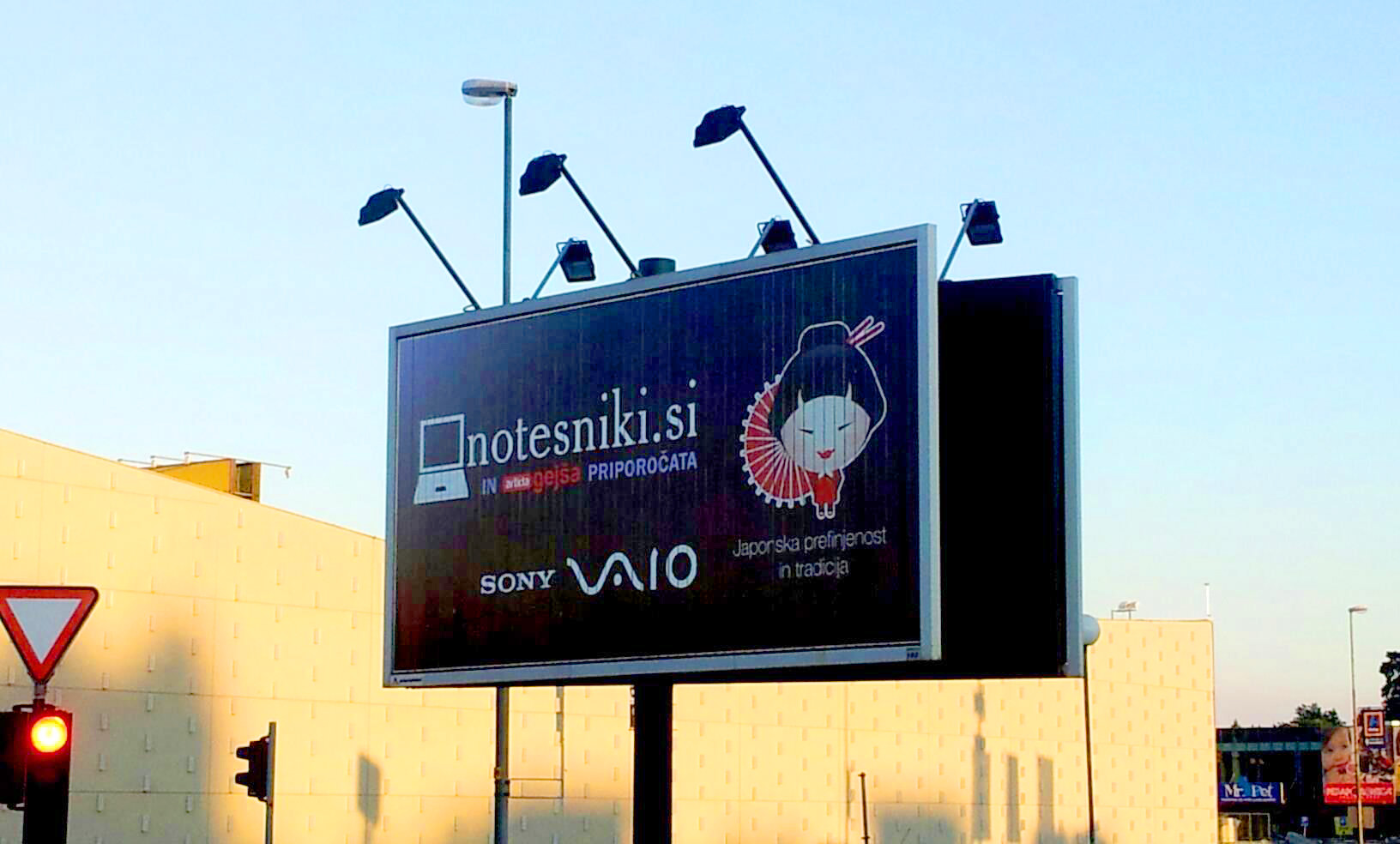
One of the characters appeared on a billboard. It was a very different setting from the screen where I had drawn it, or the small products I was making and sending to customers.
I also gave two talks at the same primary school, both connected to Artida and my illustration work.
For those visits, I adapted the presentation to the children’s age and interests. I introduced them to Artida and illustration, showed some of Miki Muster’s comic work and prepared a quiz. I also gave away T-shirts featuring Artida characters.

One small moment has stayed with me: a boy received a pink T-shirt and gave it to a girl in his class. It was a brief, sweet exchange, and one of the details I still remember from those visits.
There were quieter reminders, too. Friends continued telling me that their children loved wearing Artida T-shirts, long after I had started questioning the project’s future.
None of this changed the sales figures or meant that the business had reached its goals. But it mattered in a different way. The characters had moved beyond my own working files and become part of other people’s experiences.
Artida did not become the brand I had planned. It still gave me opportunities to share my work, speak to children and see the illustrations used in ways I could not have experienced by keeping them on my computer.
What I learned
Looking back, I would make some decisions differently.
I would spend more time understanding the market before investing so much in production. I would make prototypes, test them earlier and look for evidence that people wanted the product—not only that they liked the illustration.
I would also ask more clearly what each product offered. Was it useful? Did it solve a problem, create an experience or give someone a reason to choose it?
Learning about licensing helped me understand that a developed visual identity and a strong personal belief in an idea were only part of what a brand needed. A style guide could support future products, but it could not create demand for them.
And I would not try to carry every part of the project alone. Doing everything myself taught me a lot, but it also meant that illustration, production, marketing, sales and fulfilment all depended on the same person.
The experience was broad. I learned about illustration and animation, e-commerce, social media, advertising, printing techniques and physical product development. I made a promotional video and music for it. Researching the characters took me into cultures, languages, animals and subjects I might otherwise never have explored.
Those skills remained useful even when I stopped pursuing Artida as a growing commercial brand.
I continued exploring my own product ideas, including Planko, a family planner. Its original project presentation is available in Slovenian. It was another opportunity to work on a physical product, with Artida’s experience already behind me.
The harder lesson was knowing when to move on.
I had invested years in Artida, and I genuinely cared about it. Neither of those things, on its own, was a good enough reason to keep developing it indefinitely. I needed to acknowledge what was not working without dismissing everything I had made and learned.
I do not see Artida as a hidden commercial success. It did not meet the business ambitions I had for it. I also do not see it as time I should erase from my professional story.
It was work I cared about, with real limitations and real value. Letting go of the original ambition allowed me to keep the experience without having to keep pursuing the same outcome.